Oracle Data Guard 26ai New Features and Enhancements
Oracle Data Guard 26ai (and 21c onwards)
- Faster role transitions – Reduces switchover and failover time by optimizing role change workflows
- Minimized stall in Maximum Performance – Lowers commit latency while maintaining near‑real‑time protection.
- Choice of Lag Type for Fast‑Start Failover – Allows failover decisions based on apply lag or transport lag.
- Faster DML Redirection – Improves performance when redirecting writes during role transitions.
- Fast‑Start Failover Observer Priority (21c) – Enables prioritized observers to control failover decisions.
- Up to four Fast‑Start Failover Observers (21c) – Provides higher availability by supporting multiple observers.
- Rolling Upgrade with Application Continuity – Enables zero‑downtime upgrades while preserving session state.
- Multiple ASYNC connections – Improves redo transport throughput and resiliency with parallel async paths.
- Automatic preparation of primary and standby – Automates configuration steps to simplify Data Guard setup.
- Data Guard Broker PL/SQL API – Allows programmatic management and automation of Data Guard operations.
- SQLcl support for Data Guard commands (21c) – Enables managing Data Guard directly from SQLcl.
- ORDS support for Data Guard (21c) – Exposes Data Guard management and monitoring via REST APIs.
- Show / edit all members at once – Simplifies configuration by allowing bulk updates across members.
- JSON output for DGMGRL – Provides machine‑readable output for easier integration and automation.
- Prevent standby databases from becoming primary – Enforces role protection to avoid unintended failovers.
- Configuration and member tagging – Improves organization and identification of Data Guard components.
- Automatic standby tempfile creation – Automatically synchronizes tempfiles between primary and standby.
- PDB Recovery Isolation – Enables recovery operations at the individual PDB level without affecting others.
- Easy AWR snapshots on the standby – Simplifies performance diagnostics directly on standby databases.
- Strict database validation – Ensures configuration correctness before switchover or failover operations.
- Switchover and Failover Readiness – Clearly reports whether the environment is safe for role transitions.
- Easier tracking of role transitions – Enhances visibility and auditing of role change events.
- New view V$DG_BROKER_PROPERTY – Provides real‑time visibility into Data Guard Broker properties.
- New command: VALIDATE DGConnectIdentifier – Verifies network connectivity used by Data Guard.
- Easier checking of Fast‑Start Failover configurations – Simplifies validation of FSFO setup and health.
- Fast‑Start Failover Lag Histogram – Visualizes redo lag trends to fine‑tune failover settings.
- Enhanced observer diagnostic – Improves troubleshooting with richer observer health and status data.
- Fast‑Start Failover Configuration Validation – Proactively detects configuration issues before failures occur.
- Offload AI Inference and Vector Search to Oracle Active Data Guard – Runs AI and vector workloads on standby to offload the primary.
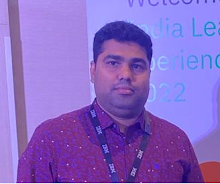
About the Author : Anurag Pandey | Database cloud Architect | Oracle | SQL Server | PostgreSQL | AI and Data Platform Enthusiast
Anurag Pandey is a Database Architect with expertise in Oracle, PostgreSQL, SQL Server, Linux, and enterprise database platforms and specializes in database architecture, performance tuning, high availability, disaster recovery, cloud modernization, and operational excellence. With extensive experience in enterprise-scale environments, Anurag is passionate about leveraging AI, automation, and modern data platforms to improve reliability, scalability, and business outcomes. He actively contributes to technical communities through knowledge sharing, architecture guidance, and thought leadership in database and data engineering domains.
Follow more articles at
Visit Blog

No comments:
Post a Comment