Dream it | Work it | Make it : - Real-world Cloud DBA troubleshooting guides covering RAC, Data Guard, RMAN, performance tuning, AWR analysis, cloud migration, PostgreSQL , AI Database, Linux | Enterprise database architecture secrets revealed.
Sunday, February 28, 2016
e2fsck: Cannot continue, aborting in linux
I am Anurag Pandey, working as Cloud Database Architect | Cloud Migration and Modernization Expert .Database Administration and Implementation. Provide technical guidance and work with global team. Extensive Experience in Database Installation and Configuration, Real Application Cluster (RAC), ASM, Dataguard , Patching, Upgrade, RMAN, Performance Tuning, Backup and Recovery, Azure, Google, AWS Cloud, AWS RDS, MySQL, Database Migration Service(DMS),CloudEndure - MGN, Azure Site Recovery, Azure Migrate, Datapump, terraform automation, Ansible, Audit, Email - anuragkumarjoy@gmail.com
About the Author : Anurag Pandey | Database cloud Architect | Oracle | SQL Server | PostgreSQL | AI and Data Platform Enthusiast
Anurag Pandey is a Database Architect with expertise in Oracle, PostgreSQL, SQL Server, Linux, and enterprise database platforms and specializes in database architecture, performance tuning, high availability, disaster recovery, cloud modernization, and operational excellence. With extensive experience in enterprise-scale environments, Anurag is passionate about leveraging AI, automation, and modern data platforms to improve reliability, scalability, and business outcomes. He actively contributes to technical communities through knowledge sharing, architecture guidance, and thought leadership in database and data engineering domains.
Follow more articles at
Visit Blog
Saturday, February 27, 2016
How to Upgrade Oracle Database 11.2.0.1 to 11.2.0.4 ?
Step 1:
============
Download Software from Oracle site.
| Oracle Database (includes Oracle Database and Oracle RAC) Note: you must download both zip files to install Oracle Database. | p13390677_112040_platform_1of7.zipp13390677_112040_platform_2of7.zip |
| Oracle Grid Infrastructure (includes Oracle ASM, Oracle Clusterware, and Oracle Restart) | p13390677_112040_platform_3of7.zip |
| Oracle Database Client | p13390677_112040_platform_4of7.zip |
| Oracle Gateways | p13390677_112040_platform_5of7.zip |
| Oracle Examples | p13390677_112040_platform_6of7.zip |
| Deinstall | p13390677_112040_platform_7of7.zip |
We need for Database:
p13390677_112040_platform_1of7.zipp13390677_112040_platform_2of7.zip
After unzip the downloaded software :-
unzip
p13390677_112040_platform_1of7.zipunzip p13390677_112040_platform_2of7.zip
Step 2:
==================
Click on runInstaller and install software with new oracle home
Step 3:
=================
After software install run pre-check before upgrade on running database using new oracle home run the prerequisite script
SQL> @/u01/app/oracle/product/11.2.0.4/db_1/rdbms/admin/utlu112i.sql
We not provide support email id then show the error ignore this error click on yes
select the language as per requirement in my case is English then click on next
Choose which database edition need to install in my case choose Enterprise Edition
then click on next
Define the Oracle Base and Software directory here we careful when give directory locations
then click on next
we use new home here
/u01/app/oracle/product/11.2.0/db_1/
Select group then click on next
check prerequisite must be check all package are install and meet software requirement
then click on next
Then click on next
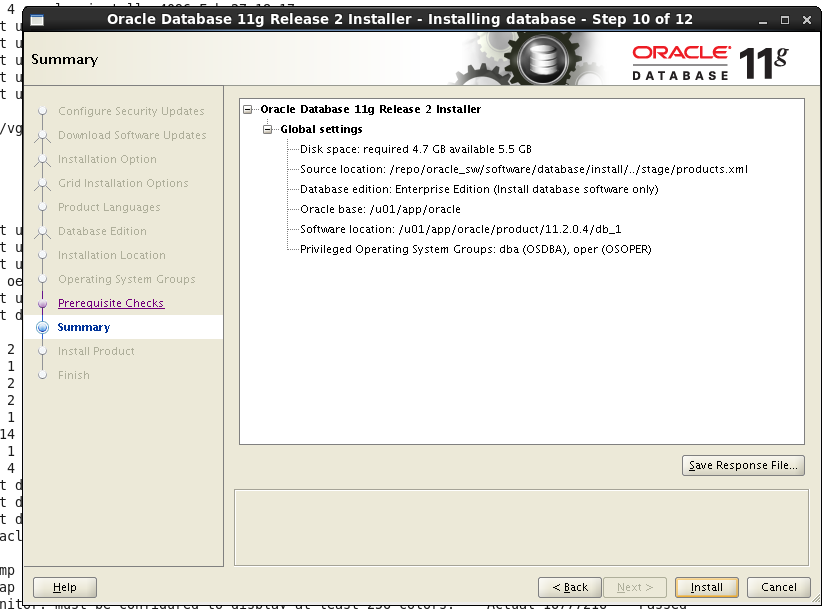
Check all parameter which you give before parameter you define validate then click next
Here software is almost install then popup on execute Root Script
We login from root user and run script show on popup
after successful run root.sh click on ok .
then click on close
click on next
Here we select which database need to be upgrade then click on next
Check here warning then click on next
Here select appropriate value and degree of parallelism as per env. here we take 1
if you upgrade time zone tick on timezone dbua also recommend to take backup if need then ypu specify backup location then click on next
Here choose do not move database files as Part of upgrade
if you move file system to ASM so choose as per requirement
then click on next
check report after upgrade report all components are show successful .
then you login the database from new ORACLE_HOME
check the /etc/oratab file
change .profile in unix/aix .bash_profile in linux set new oracle home location
Enjoy!!!
I am Anurag Pandey, working as Cloud Database Architect | Cloud Migration and Modernization Expert .Database Administration and Implementation. Provide technical guidance and work with global team. Extensive Experience in Database Installation and Configuration, Real Application Cluster (RAC), ASM, Dataguard , Patching, Upgrade, RMAN, Performance Tuning, Backup and Recovery, Azure, Google, AWS Cloud, AWS RDS, MySQL, Database Migration Service(DMS),CloudEndure - MGN, Azure Site Recovery, Azure Migrate, Datapump, terraform automation, Ansible, Audit, Email - anuragkumarjoy@gmail.com
About the Author : Anurag Pandey | Database cloud Architect | Oracle | SQL Server | PostgreSQL | AI and Data Platform Enthusiast
Anurag Pandey is a Database Architect with expertise in Oracle, PostgreSQL, SQL Server, Linux, and enterprise database platforms and specializes in database architecture, performance tuning, high availability, disaster recovery, cloud modernization, and operational excellence. With extensive experience in enterprise-scale environments, Anurag is passionate about leveraging AI, automation, and modern data platforms to improve reliability, scalability, and business outcomes. He actively contributes to technical communities through knowledge sharing, architecture guidance, and thought leadership in database and data engineering domains.
Follow more articles at
Visit Blog
ORA-23515: materialized views and/or their indices exist in the tablespace
Make list of MATERIALIZED view:
===================================
select 'drop materialized view '|| a.owner||'.'|| a.object_name || ';' from dba_objects a ,dba_segments b where a.OWNER=b.OWNER and b.TABLESPACE_NAME='MGMT_TABLESPACE' and object_type='MATERIALIZED VIEW';
drop materialized view SYSMAN.MGMT$ARU_PATCH_RECOM_MD;
I am Anurag Pandey, working as Cloud Database Architect | Cloud Migration and Modernization Expert .Database Administration and Implementation. Provide technical guidance and work with global team. Extensive Experience in Database Installation and Configuration, Real Application Cluster (RAC), ASM, Dataguard , Patching, Upgrade, RMAN, Performance Tuning, Backup and Recovery, Azure, Google, AWS Cloud, AWS RDS, MySQL, Database Migration Service(DMS),CloudEndure - MGN, Azure Site Recovery, Azure Migrate, Datapump, terraform automation, Ansible, Audit, Email - anuragkumarjoy@gmail.com
About the Author : Anurag Pandey | Database cloud Architect | Oracle | SQL Server | PostgreSQL | AI and Data Platform Enthusiast
Anurag Pandey is a Database Architect with expertise in Oracle, PostgreSQL, SQL Server, Linux, and enterprise database platforms and specializes in database architecture, performance tuning, high availability, disaster recovery, cloud modernization, and operational excellence. With extensive experience in enterprise-scale environments, Anurag is passionate about leveraging AI, automation, and modern data platforms to improve reliability, scalability, and business outcomes. He actively contributes to technical communities through knowledge sharing, architecture guidance, and thought leadership in database and data engineering domains.
Follow more articles at
Visit Blog
ORA-24005: Inappropriate utilities used to perform DDL on AQ table
*
ERROR at line 1:
ORA-24005: Inappropriate utilities used to perform DDL on AQ table SYSMAN.MGMT_LOADER_QTABLE
execute DBMS_AQADM.DROP_QUEUE_TABLE (queue_table => 'SYSMAN.MGMT_NOTIFY_INPUT_QTABLE', force => true);
select 'execute DBMS_AQADM.DROP_QUEUE_TABLE (queue_table => ' ||owner||'.'||table_name||' , force => true) ;' from dba_LOBS WHERE TABLESPACE_NAME='MGMT_TABLESPACE';
I am Anurag Pandey, working as Cloud Database Architect | Cloud Migration and Modernization Expert .Database Administration and Implementation. Provide technical guidance and work with global team. Extensive Experience in Database Installation and Configuration, Real Application Cluster (RAC), ASM, Dataguard , Patching, Upgrade, RMAN, Performance Tuning, Backup and Recovery, Azure, Google, AWS Cloud, AWS RDS, MySQL, Database Migration Service(DMS),CloudEndure - MGN, Azure Site Recovery, Azure Migrate, Datapump, terraform automation, Ansible, Audit, Email - anuragkumarjoy@gmail.com
About the Author : Anurag Pandey | Database cloud Architect | Oracle | SQL Server | PostgreSQL | AI and Data Platform Enthusiast
Anurag Pandey is a Database Architect with expertise in Oracle, PostgreSQL, SQL Server, Linux, and enterprise database platforms and specializes in database architecture, performance tuning, high availability, disaster recovery, cloud modernization, and operational excellence. With extensive experience in enterprise-scale environments, Anurag is passionate about leveraging AI, automation, and modern data platforms to improve reliability, scalability, and business outcomes. He actively contributes to technical communities through knowledge sharing, architecture guidance, and thought leadership in database and data engineering domains.
Follow more articles at
Visit Blog
Deleted Central Inventory : Re - Create Inventory in Oracle 11gr2
su - oracle
[oracle@test~]$
[oracle@test~]$
[oracle@test~]$ echo $ORACLE_HOME
/u01/app/oracle/product/11.2.0/db_1
[oracle@test~]$ echo $ORACLE_SID
TEST
[oracle@test~]$ echo $ORACLE_BASE
/u01/app/oracle
[oracle@test~]$
[oracle@test bin]$
[oracle@test bin]$ pwd
/u01/app/oracle/product/11.2.0/db_1/oui/bin
[oracle@test bin]$
[oracle@test bin]$ ls
addLangs.sh attachHome.sh filesList.bat filesList.sh resource runInstaller runSSHSetup.sh
addNode.sh detachHome.sh filesList.properties lsnodes runConfig.sh runInstaller.sh
[oracle@test bin]$
[oracle@test bin]$
[oracle@test bin]$
[oracle@test app]$ ls
Make oraInventory oraInventory_old
[oracle@test app]$ ls
oracle oraInventory_old
[oracle@test app]$
[oracle@test app]$
[oracle@test app]$
I am Anurag Pandey, working as Cloud Database Architect | Cloud Migration and Modernization Expert .Database Administration and Implementation. Provide technical guidance and work with global team. Extensive Experience in Database Installation and Configuration, Real Application Cluster (RAC), ASM, Dataguard , Patching, Upgrade, RMAN, Performance Tuning, Backup and Recovery, Azure, Google, AWS Cloud, AWS RDS, MySQL, Database Migration Service(DMS),CloudEndure - MGN, Azure Site Recovery, Azure Migrate, Datapump, terraform automation, Ansible, Audit, Email - anuragkumarjoy@gmail.com
About the Author : Anurag Pandey | Database cloud Architect | Oracle | SQL Server | PostgreSQL | AI and Data Platform Enthusiast
Anurag Pandey is a Database Architect with expertise in Oracle, PostgreSQL, SQL Server, Linux, and enterprise database platforms and specializes in database architecture, performance tuning, high availability, disaster recovery, cloud modernization, and operational excellence. With extensive experience in enterprise-scale environments, Anurag is passionate about leveraging AI, automation, and modern data platforms to improve reliability, scalability, and business outcomes. He actively contributes to technical communities through knowledge sharing, architecture guidance, and thought leadership in database and data engineering domains.
Follow more articles at
Visit Blog
Monday, February 22, 2016
Create Database using DBCA in 11gr2
I am Anurag Pandey, working as Cloud Database Architect | Cloud Migration and Modernization Expert .Database Administration and Implementation. Provide technical guidance and work with global team. Extensive Experience in Database Installation and Configuration, Real Application Cluster (RAC), ASM, Dataguard , Patching, Upgrade, RMAN, Performance Tuning, Backup and Recovery, Azure, Google, AWS Cloud, AWS RDS, MySQL, Database Migration Service(DMS),CloudEndure - MGN, Azure Site Recovery, Azure Migrate, Datapump, terraform automation, Ansible, Audit, Email - anuragkumarjoy@gmail.com
About the Author : Anurag Pandey | Database cloud Architect | Oracle | SQL Server | PostgreSQL | AI and Data Platform Enthusiast
Anurag Pandey is a Database Architect with expertise in Oracle, PostgreSQL, SQL Server, Linux, and enterprise database platforms and specializes in database architecture, performance tuning, high availability, disaster recovery, cloud modernization, and operational excellence. With extensive experience in enterprise-scale environments, Anurag is passionate about leveraging AI, automation, and modern data platforms to improve reliability, scalability, and business outcomes. He actively contributes to technical communities through knowledge sharing, architecture guidance, and thought leadership in database and data engineering domains.
Follow more articles at
Visit Blog
Add Harddisk in linux as mount point /u01 using Virtual Box
Login as ROOT user
===================================
[root@test ~]# df -h
Filesystem Size Used Avail Use% Mounted on
/dev/mapper/vg_test-lv_root 8.3G 5.1G 2.8G 65% /
tmpfs 2.0G 76K 2.0G 1% /dev/shm
/dev/sda1 477M 55M 397M 13% /boot
/dev/sdb1 9.8G 3.7G 5.6G 40% /repo
[root@test ~]#
[root@test ~]#
[root@test ~]# fdisk -l
Disk /dev/sda: 12.9 GB, 12884901888 bytes
255 heads, 63 sectors/track, 1566 cylinders
Units = cylinders of 16065 * 512 = 8225280 bytes
Sector size (logical/physical): 512 bytes / 512 bytes
I/O size (minimum/optimal): 512 bytes / 512 bytes
Disk identifier: 0x00095f55
Device Boot Start End Blocks Id System
/dev/sda1 * 1 64 512000 83 Linux
Partition 1 does not end on cylinder boundary.
/dev/sda2 64 1567 12069888 8e Linux LVM
Disk /dev/sdb: 10.8 GB, 10766991360 bytes
255 heads, 63 sectors/track, 1309 cylinders
Units = cylinders of 16065 * 512 = 8225280 bytes
Sector size (logical/physical): 512 bytes / 512 bytes
I/O size (minimum/optimal): 512 bytes / 512 bytes
Disk identifier: 0xc71cec29
Device Boot Start End Blocks Id System
/dev/sdb1 1 1309 10514511 83 Linux
Disk /dev/sdc: 12.9 GB, 12884901888 bytes
255 heads, 63 sectors/track, 1566 cylinders
Units = cylinders of 16065 * 512 = 8225280 bytes
Sector size (logical/physical): 512 bytes / 512 bytes
I/O size (minimum/optimal): 512 bytes / 512 bytes
Disk identifier: 0x00000000
Disk /dev/mapper/vg_test-lv_root: 9122 MB, 9122611200 bytes
255 heads, 63 sectors/track, 1109 cylinders
Units = cylinders of 16065 * 512 = 8225280 bytes
Sector size (logical/physical): 512 bytes / 512 bytes
I/O size (minimum/optimal): 512 bytes / 512 bytes
Disk identifier: 0x00000000
Disk /dev/mapper/vg_test-lv_swap: 3145 MB, 3145728000 bytes
255 heads, 63 sectors/track, 382 cylinders
Units = cylinders of 16065 * 512 = 8225280 bytes
Sector size (logical/physical): 512 bytes / 512 bytes
I/O size (minimum/optimal): 512 bytes / 512 bytes
Disk identifier: 0x00000000
[root@test ~]#
[root@test ~]# fdisk /dev/sdc
Device contains neither a valid DOS partition table, nor Sun, SGI or OSF disklabel
Building a new DOS disklabel with disk identifier 0x9595adae.
Changes will remain in memory only, until you decide to write them.
After that, of course, the previous content won't be recoverable.
Warning: invalid flag 0x0000 of partition table 4 will be corrected by w(rite)
WARNING: DOS-compatible mode is deprecated. It's strongly recommended to
switch off the mode (command 'c') and change display units to
sectors (command 'u').
Command (m for help): p
Disk /dev/sdc: 12.9 GB, 12884901888 bytes
255 heads, 63 sectors/track, 1566 cylinders
Units = cylinders of 16065 * 512 = 8225280 bytes
Sector size (logical/physical): 512 bytes / 512 bytes
I/O size (minimum/optimal): 512 bytes / 512 bytes
Disk identifier: 0x9595adae
Device Boot Start End Blocks Id System
Command (m for help): n
Command action
e extended
p primary partition (1-4)
p
Partition number (1-4): 1
First cylinder (1-1566, default 1):
Using default value 1
Last cylinder, +cylinders or +size{K,M,G} (1-1566, default 1566):
Using default value 1566
Command (m for help): p
Disk /dev/sdc: 12.9 GB, 12884901888 bytes
255 heads, 63 sectors/track, 1566 cylinders
Units = cylinders of 16065 * 512 = 8225280 bytes
Sector size (logical/physical): 512 bytes / 512 bytes
I/O size (minimum/optimal): 512 bytes / 512 bytes
Disk identifier: 0x9595adae
Device Boot Start End Blocks Id System
/dev/sdc1 1 1566 12578863+ 83 Linux
Command (m for help): w
The partition table has been altered!
Calling ioctl() to re-read partition table.
Syncing disks.
[root@test ~]#
[root@test ~]#
[root@test ~]# mkfs.ext4 /dev/sdc1
mke2fs 1.43-WIP (20-Jun-2013)
Filesystem label=
OS type: Linux
Block size=4096 (log=2)
Fragment size=4096 (log=2)
Stride=0 blocks, Stripe width=0 blocks
786432 inodes, 3144715 blocks
157235 blocks (5.00%) reserved for the super user
First data block=0
Maximum filesystem blocks=3221225472
96 block groups
32768 blocks per group, 32768 fragments per group
8192 inodes per group
Superblock backups stored on blocks:
32768, 98304, 163840, 229376, 294912, 819200, 884736, 1605632, 2654208
Allocating group tables: done
Writing inode tables: done
Creating journal (32768 blocks): done
Writing superblocks and filesystem accounting information: done
[root@test ~]#
[root@test ~]# cd /
[root@test /]# mkdir /u01
[root@test /]#
[root@test /]# mount -t ext4 /dev/sdc1 /u01
[root@test /]#
[root@test /]# df -h
Filesystem Size Used Avail Use% Mounted on
/dev/mapper/vg_test-lv_root 8.3G 5.1G 2.8G 65% /
tmpfs 2.0G 76K 2.0G 1% /dev/shm
/dev/sda1 477M 55M 397M 13% /boot
/dev/sdb1 9.8G 3.7G 5.6G 40% /repo
/dev/sdc1 12G 30M 12G 1% /u01
[root@test /]#
[root@test /]# vi /etc/fstab
[root@test /]#
[root@test /]# cat etc/fstab
#
# /etc/fstab
# Created by anaconda on Sun Feb 21 22:08:33 2016
#
# Accessible filesystems, by reference, are maintained under '/dev/disk'
# See man pages fstab(5), findfs(8), mount(8) and/or blkid(8) for more info
#
/dev/mapper/vg_test-lv_root / ext4 defaults 1 1
UUID=2f39e521-c679-45a8-899b-3e4facdb6fd7 /boot ext4 defaults 1 2
/dev/mapper/vg_test-lv_swap swap swap defaults 0 0
tmpfs /dev/shm tmpfs defaults 0 0
devpts /dev/pts devpts gid=5,mode=620 0 0
sysfs /sys sysfs defaults 0 0
proc /proc proc defaults 0 0
/dev/sdb1 /repo ext4 defaults 1 2
/dev/sdc1 /u01 ext4 defaults 1 2
[root@test /]#
I am Anurag Pandey, working as Cloud Database Architect | Cloud Migration and Modernization Expert .Database Administration and Implementation. Provide technical guidance and work with global team. Extensive Experience in Database Installation and Configuration, Real Application Cluster (RAC), ASM, Dataguard , Patching, Upgrade, RMAN, Performance Tuning, Backup and Recovery, Azure, Google, AWS Cloud, AWS RDS, MySQL, Database Migration Service(DMS),CloudEndure - MGN, Azure Site Recovery, Azure Migrate, Datapump, terraform automation, Ansible, Audit, Email - anuragkumarjoy@gmail.com
About the Author : Anurag Pandey | Database cloud Architect | Oracle | SQL Server | PostgreSQL | AI and Data Platform Enthusiast
Anurag Pandey is a Database Architect with expertise in Oracle, PostgreSQL, SQL Server, Linux, and enterprise database platforms and specializes in database architecture, performance tuning, high availability, disaster recovery, cloud modernization, and operational excellence. With extensive experience in enterprise-scale environments, Anurag is passionate about leveraging AI, automation, and modern data platforms to improve reliability, scalability, and business outcomes. He actively contributes to technical communities through knowledge sharing, architecture guidance, and thought leadership in database and data engineering domains.
Follow more articles at
Visit Blog
Oracle Database Deep Health Check Checklist
Oracle Database Deep Health Check Checklist Recommended assessment levels Level Purpose Typical scope L1 Operational health Availability, sp...
-
C:\Users\Administrator.ANURAG-PC>tnsping ducat TNS Ping Utility for 32-bit Windows: Version 11.2.0.1.0 - Production on 27-DEC-2017 21:...
-
Error while starting ./runInstaller for oracle 19c installation on Linux 8 [oracle@ip-192-168-43-225 oracle]$ ./runInstaller /u01/or...
-
Install CSSCAN login with SYS user @?/rdbms/admin/csminst.sql ############### csscan \"sys as sysdba\" full=y ...